India
Online ordering for restaurants in India, without the aggregator cut
Swiggy and Zomato bring in orders, and they take a slice of each one. Tuckly is an online food ordering system that gives your restaurant its own ordering link for the customers who already know you: parcel, delivery and dine-in, paid by UPI or card, with no platform commission from us.
- Parcel, delivery and dine-in QR from one menu
- Porter riders on request in the cities Porter serves
- Petpooja, Restroworks and UrbanPiper connections, each with a plain status
- FSSAI number and GST shown on every direct order bill
Kabir Street Kitchen
North Indian · Indiranagar
Deliver to · 12 MG Road, Indiranagar
Chef's specials
View all Mains
Butter chicken
₹320
 Thalis
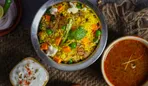
Biryani thali
₹340
- Add
Butter chicken thali
With rice, two rotis and raita
₹320
- Add
Paneer tikka wrap
Mint chutney, pickled onion
₹190
- Add
Masala chai
Served hot, 250 ml
₹40
Illustrative view.
What is different about running direct orders in India
-
Aggregator deductions are the biggest cost line
Business press has reported Swiggy commissions of 17 to 25 per cent (Business Standard, August 2024) and Zomato rates between 10 and 28 per cent (NDTV Profit via Verdict, September 2025). Your own agreement is the figure that matters.
-
UPI makes direct payment cheap
On a gateway priced like Razorpay's standard plan (2 per cent per successful transaction plus 18 per cent GST on that fee, per its pricing page updated May 2026), a ₹500 order costs about ₹11.80 to collect. That is the whole platform-side cost of a direct order on Tuckly.
-
Porter for the delivery leg
Porter runs two-wheeler delivery in 22 listed Indian cities and offers API access for two-wheelers only. Where it operates, you can request a rider for a direct order. How the Porter connection works.
-
GST and FSSAI on your own bills
On aggregator orders the platform pays GST on the restaurant service. On a direct order you charge and remit it yourself, as you already do for walk-ins, and the bill carries your 14-digit FSSAI number.
Worked example, Bengaluru
A biryani kitchen in Koramangala that moves 40 orders a week to its own link
Say the kitchen does 700 aggregator orders a month at an average of ₹550, and its agreement takes 25 per cent, a rate inside the ranges reported in the business press. That is ₹137.50 per order, or about ₹96,000 a month before packaging and the customer-side platform fee.
It prints a QR code on every parcel, replies to WhatsApp enquiries with its ordering link, and moves 40 orders a week, roughly 175 a month, to direct. On those 175 orders the aggregator cut (about ₹24,000 a month) disappears. In its place: a gateway fee of roughly ₹13 per order at 2 per cent plus GST on the fee, so about ₹2,300 a month, plus whatever delivery costs. For parcel orders collected at the counter there is no delivery cost at all; for delivered ones there is Porter's trip fee or the wage of an own rider.
Nothing in this example assumes the other 525 orders move. The commission calculator lets you run it with your own volume, order value and rate.
Figures are illustrative and chosen to show the arithmetic, not to predict your results.
A direct order and an aggregator order, line by line
The lines below are the ones that actually differ. Food cost, packaging and staff are the same whichever channel the order came from.
| Cost line | Direct order on your Tuckly site | Typical aggregator order |
|---|---|---|
| Platform commission | None from Tuckly | A percentage of order value per your agreement; ranges of 10 to 35 per cent have been reported by Business Standard, NDTV Profit and Inc42 between 2024 and 2026 |
| Customer-side platform fee | None | Charged to the customer per order: Zomato ₹14.9 before GST and Swiggy ₹17.58 including GST as of March 2026 (Inc42) |
| Payment collection | Your gateway's published rate, for example 2 per cent plus 18 per cent GST on the fee on Razorpay's standard plan (May 2026) | Bundled into the platform's deductions |
| Delivery | Porter's trip fee where you use Porter, your own rider's wage, or nothing on parcel orders | Handled by the platform's fleet; the customer usually pays a delivery fee |
| GST on the restaurant service | You charge 5 per cent without input credit and remit it, as with dine-in | Paid by the e-commerce operator since 1 January 2022 |
| Customer name, number and history | On your order screen | Held by the platform |
| Software | Subscription per the pricing page | Usually none; paid through commission |
Aggregator terms differ by city, cuisine and contract. Check your own agreement before relying on any range quoted here.
Setting up direct ordering for an Indian restaurant
Most of this is a few hours of work. The part that takes longer is moving customers, and the last step is about that.
- 1
Build the menu with parcel and dine-in in mind
Add items with half and full portions as variants, extra raita or gravy as add-ons, and a lunch combo that hides itself after 3pm. Mark the biryani sold out from a phone when the dum runs out.
- 2
Put your FSSAI number and GST details on the bill
FSSAI's 2021 order requires the 14-digit licence or registration number on receipts, and a 2024 direction bars e-commerce food platforms from listing a business that does not display it. Enter yours once during setup so it appears on every direct order bill.
- 3
Connect a payment gateway
Online payment runs through a supported gateway connected to your account. UPI, cards and wallets depend on the gateway's offering, and the gateway charges its own fee. Tuckly adds no percentage on top.
- 4
Decide how delivered orders reach the customer
In the cities Porter serves, request a rider from the order. Elsewhere, or when you prefer, assign your own rider. Parcel orders simply get a ready time. The delivery management page explains each path.
- 5
Link your POS if it is on the list
Petpooja publishes an online-ordering API and issues credentials to approved partners; Restroworks runs a formal integration programme; UrbanPiper accepts upstream ordering channels through certification. Each has an honest status on its integration page.
- 6
Send people to your link
Google Business Profile order button, Instagram bio, the WhatsApp reply you send twenty times a day, a QR sticker on every parcel bag. The guide to promoting an ordering website is a realistic plan for the first two months.
Porter where it runs, your own rider where it does not
Porter's own site lists Delhi NCR, Hyderabad, Bengaluru, Mumbai, Chennai, Kolkata, Pune, Ahmedabad, Surat, Jaipur, Indore, Lucknow, Kochi, Coimbatore and a handful of other cities, and says its APIs currently cover two-wheelers. For a biryani parcel that is the right vehicle. Outside those cities, or for a bulk order that needs a car, you assign your own rider instead.
- Request a Porter rider from the order screen in supported cities
- Assign one of your own riders with the order details on their phone
- Switch a delivery order to parcel pickup when the customer calls to say they will collect
- Set your own delivery areas and charges per area
Order #1047 · Delivery
3 items · ₹640 · Paid online
Fulfil with
- Order placed 12:31
- Accepted by kitchen 12:32
- Rider requested via Porter 12:44
- Picked up 12:58
- Delivered —
The Indian POS and channel ecosystem, by status
A logo on a page is not an integration. Each entry below links to a page that says what syncs, what is planned, and what is not available.
-
Petpooja
Documented online-ordering API (menu push, order save with accept or reject, status callbacks, rider info). Credentials are issued by Petpooja to approved partners.
-
Restroworks (formerly Posist)
Technology Integration Program with REST API and sandbox; the vendor quotes 6 to 10 weeks to go live and a one-time implementation fee.
-
UrbanPiper
Middleware that feeds ordering channels into a POS. Third-party channels join as upstream partners after sandbox testing and certification.
-
Zomato
Not an integration. Zomato's POS developer programme sets a 500-restaurant or 50,000-order-a-month prerequisite for partners. The page explains what that means for you.
-
Swiggy
Not an integration. Swiggy orders reach POS systems through middleware such as Petpooja or UrbanPiper, not through Tuckly.
-
Dine-in QR
Table codes that open your menu for guests who are already seated. Works in the phone browser, no app.
Running direct ordering in an Indian restaurant: what the first month looks like
The first thing most owners notice after switching on a direct ordering link is not the saving. It is the phone. WhatsApp messages that used to say “bhaiya, what is the menu today?” turn into a link reply, and the order arrives typed, paid and with an address. The saving shows up at the end of the month when the aggregator settlement is smaller because some of the regulars went elsewhere, to you.
Aggregators and direct are different tools
Swiggy and Zomato are discovery channels. A student who moved to Whitefield last week finds you there. Nobody is suggesting you switch them off. What they are not good at is cheap repeat business: the same customer ordering the same chicken 65 every Friday still costs you the full commission every Friday, and you still do not have their number.
A direct link is the opposite. It brings in almost nobody on its own, but every order through it is yours. Restaurants that do well with it tend to have one of three things: a dine-in crowd that can be pointed at a QR code, a social media following, or a delivery radius small enough that the same families order every week. If you have none of those yet, start anyway, but expect the direct share to grow slowly. Start anyway; the direct share grows with every bag that leaves with a QR on it.
UPI changed the economics of collecting payment
Five years ago, collecting money online meant card fees that ate a visible chunk of a ₹200 order. UPI changed that. On Razorpay’s published standard plan (May 2026) the platform fee is 2 per cent per successful transaction across domestic methods, with 18 per cent GST on the fee itself, so a ₹300 dosa order costs roughly ₹7 to collect. The gateway is the only percentage on a direct order; Tuckly does not add one.
Two practical notes. First, the gateway fee is on the amount collected, so if you pass a delivery charge to the customer, the fee applies to that too. Second, if you allow cash on delivery or pay-at-counter for parcels, ask us how that is handled on your account rather than assuming it; this page describes online payment.
GST and FSSAI on direct bills
When an order comes through an aggregator, the platform has paid GST on the restaurant service since January 2022. When it comes through your own site, you are back to the position you are in for a walk-in customer: 5 per cent GST charged on the bill and remitted by you, without input tax credit for a standalone restaurant (the GST Council’s September 2025 press release confirms standalone restaurants cannot opt into the 18 per cent with credit route). Your accountant already handles this for dine-in; direct orders simply join that pile.
FSSAI’s 2021 order requires the 14-digit licence or registration number on bills and receipts, enforced from January 2022, and FSSAI’s 2024 direction bars e-commerce food platforms from listing any business that does not display a valid licence. Enter your number once during setup and it prints on every direct order bill.
Delivery is the part to plan carefully
Porter is the reason a restaurant with no riders can offer delivery on its own site. It runs two-wheeler delivery across the cities on its site, and its API is available for two-wheelers. The honest caveats are on the Porter integration page: there is no self-serve developer portal, so the depth of automation inside Tuckly is being validated with Porter’s enterprise team, and the workflow we promise today is requesting a rider against an order.
If you already employ a rider, assign orders to them from the order screen. If you do both, choose per order: Porter for the far-off address at 9pm, your own rider for the three orders going to the same apartment complex. Delivery areas and charges are yours to set, and a charge that covers the trip without scaring people off is worth an evening of thought.
Where the first direct orders come from
Four places, in the order that works for most restaurants: the Google Business Profile order link, because people searching your name are already customers; the QR sticker on every parcel bag; the Instagram bio and story highlight; and a WhatsApp Business auto-reply with the link. A table card for dine-in guests comes next. None of this needs a budget, and the commission calculator will tell you what each hundred orders moved is worth with your numbers.
Questions from restaurant owners in India
Can I keep Swiggy and Zomato and still use Tuckly?
Yes, and that is the usual setup. Aggregators bring new customers; your own link gives regulars a cheaper way to reorder. Aggregator orders do not flow into Tuckly, so you would run them from the aggregator's partner app or your POS as you do now. See direct ordering vs delivery apps.
Do customers pay the ₹14.9 or ₹17.58 platform fee on my site?
No. Those are fees the aggregators charge their customers per order (Inc42, March 2026). On your own site the customer pays your menu price, your delivery charge if any, and GST. There is no platform fee in either direction.
Who pays GST on a direct order?
You do, as with a dine-in bill. Since 1 January 2022 the e-commerce operator pays GST on restaurant services supplied through its platform; a direct order is not supplied through a platform, so the 5 per cent (without input tax credit for standalone restaurants) is charged on your bill and remitted by you. Confirm your own position with your accountant.
Which payment gateways work?
Online payment runs through a supported gateway connected to your account, and the gateway's own fee applies. Razorpay's published standard pricing (May 2026) is a useful benchmark for what UPI and card collection costs: 2 per cent per successful transaction plus 18 per cent GST on the fee. Ask us which gateways are supported for your account before you sign up.
Is Porter available in my city?
Porter's site lists 22 Indian cities and says API integration covers 16 of them. If your city is not listed, you can still offer delivery with your own rider, or offer parcel pickup only. The Porter page has the list.
What about Porter in Dubai, Turkey or Malaysia?
Porter operates there, but the Tuckly connection is built and tested for India. Treat other countries as unvalidated and talk to us first.
Give your regulars a link that is yours
Set up your menu, connect a gateway, decide how parcels and deliveries go out, and start printing the QR on your bags. No platform commission on direct orders; gateway fees, delivery and GST apply as described above.
Gateway fees, delivery and taxes are separate. Pricing
Last reviewed 29 October 2026.