Solutions · Coffee shops
Online ordering for specialty coffee shops: drinks, beans and the 8am queue
Specialty coffee has a customisation problem and a retail opportunity, and most ordering apps handle neither well. Tuckly's online ordering system lets a coffee shop take order-ahead drinks with the right milk, dose and temperature, and sell 250g bags of beans from the same page, without paying a platform commission on either.
- Drinks with size, milk, shots and syrup as priced options
- Beans and brewing gear as pickup or local delivery items
- Order-ahead so commuters skip the queue
- Seasonal drinks that switch on and off by date
Menu · Mains
Last published 11:20Margherita pizza
San Marzano tomato, fior di latte, basil
Sizes
Add-ons
Illustrative view.
-
Customisation that the price follows
Sizes are variants, milks and shots are add-ons with their own prices, temperature and dose preferences go in the note. The total is right before the customer pays.
-
Retail on the same page as the drinks
A 250g bag, a 1kg bag, a filter paper pack. List them next to the espresso menu and let people collect or get local delivery.
-
Order-ahead with a real lead time
The commuter orders at the station and collects at the counter. You decide the lead time; the page shows a ready time the bar can keep.
-
Seasonal menus without a reprint
A cold brew section for the summer, a spiced latte from November. Availability windows handle it.
A drink menu that handles 'oat flat white, extra hot, one shot'
Every specialty coffee shop has regulars with a drink that does not exist on the board. The ordering page needs to take that order without a phone call and without the barista guessing.
The structure that works: size as a variant, because it changes the base price; milk alternatives and shot count as add-ons, because each has a price; and the rest in a note the barista reads in one line. A customer who orders the same thing every morning sees their saved details and reorders in a few taps.
- Variants for size, add-ons for milk and shots
- A free-text note for temperature, dose and cup
- Saved details for returning customers
- A sold-out switch for the pastry that went early
Menu · Mains
Last published 11:20Margherita pizza
San Marzano tomato, fior di latte, basil
Sizes
Add-ons
Beans and gear, sold from the same page as the drinks
Retail is the part of a coffee shop that marketplaces are worst at. A bag of beans has a roast date, a grind preference and a weight, none of which fit a food-delivery listing.
On your own ordering site, a coffee is a product with variants (250g, 1kg) and add-ons that may cost nothing (whole bean, espresso grind, filter grind). Customers collect it with their flat white or have it delivered locally by your own rider or by Porter where it operates. For orders that need to travel across the country, you would use a courier outside Tuckly; there is no parcel integration.
- Weights as variants, grind as a no-cost add-on
- Roast date and tasting notes in the description
- Pickup with the morning drink, or local delivery
- No marketplace commission on a ₹900 bag of beans
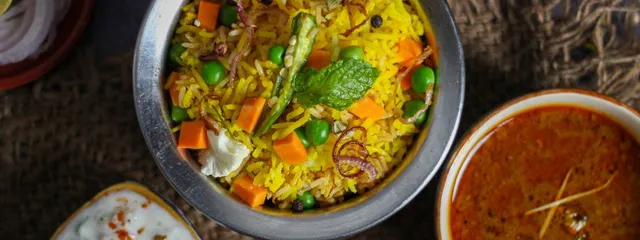
Popular right now
-

Butter chicken
₹320
-

Hyderabadi biryani
₹340

Setting up order-ahead for the commute
Four steps. The fourth is the one shops skip and then wonder why the orders pile up.
- 1
Set a lead time per kind of item
Drinks may be ten minutes, a toasted sandwich fifteen, a bag of beans whatever it takes to walk to the shelf. The takeaway and pickup page covers how ready times are shown to the customer.
- 2
Label the collection point
A corner of the bar with a sign, names written on cups. Order-ahead customers should not have to queue to ask where their drink is.
- 3
Put the link where commuters will see it
The Google listing, the Instagram bio, a code on the door they walk past at 7.50 every day. The QR code generator produces a code sized for a door sticker.
- 4
Keep the order screen by the machine
An alert on a phone or tablet next to the grinder. Accept with a time, make, mark ready. The order management page explains the statuses.
A morning, by the numbers
What order-ahead is worth if even thirty regulars use it
Suppose thirty of your morning regulars order ahead on a working day, at an average of ₹220 for a drink and a pastry. That is ₹6,600 of orders before 9.15.
Through a marketplace charging, say, 20%, ₹1,320 of that goes to commission each morning. Over 26 trading days that is ₹34,320 a month, on orders from people who already come in every day.
Through your own ordering page there is no platform commission. The payment gateway's fee applies (at the gateway's published rate; around 2% is typical in India), which on ₹6,600 is about ₹132. The rest stays with the shop. The commission calculator runs this with your own figures.
Figures are illustrative and chosen to show the arithmetic, not to predict your results.
The parts a coffee shop uses
-
Menu builder
Variants, add-ons, descriptions and availability windows for seasonal drinks.
-
Takeaway and pickup
Order-ahead with lead times and ready times.
-
Order management
Alerts by the machine, statuses, names on cups.
-
Delivery management
Local delivery of beans and drinks by your own rider, or Porter where it operates.
-
Online ordering cost calculator
Compare what a month of orders costs across setups.
-
Pricing
No commission on direct orders; the rest listed plainly.
What a coffee shop should decide before going live
The setup is quick. The decisions underneath it are what make the page useful six months later, so it is worth making them deliberately.
How deep to make customisation
A specialty menu invites endless options. Resist them. The rule that holds up in practice is three levels: a variant for anything that changes the base price (size), an add-on for anything additive with its own price (milks, shots, syrups), and a note for anything that is a preference rather than a product (temperature, dose, decaf if you do not charge for it). A ticket built this way reads in a glance. A ticket with fifteen toggles does not, and the barista will start ignoring half of them.
Price the add-ons as you price them at the counter, and check that the combinations add up. If a large oat latte is ₹260 at the counter, it should be ₹260 on the page, not ₹250 because the size and milk were priced separately once and never reconciled.
Retail: grind, freshness and weight
Beans sell better online than drinks do, because nobody minds collecting a bag that was packed yesterday. Three details matter. First, weight as a variant: 250g and 1kg, each with its own price. Second, grind as an add-on that costs nothing: whole bean, espresso, filter, moka. Third, the roast date, in the description, and kept current. Customers who buy specialty coffee look for it and notice when it is stale.
Brewing gear (filter papers, a cloth, a tamper) sits in a section of its own. It will not sell in volume, but it rounds out the page and it is a reason for a regular to open it on a Sunday.
Seasonal menus and the availability window
A cold brew section that appears in April and disappears in October, a spiced latte for the winter: these are availability windows, set once. The alternative, editing the menu by hand twice a year, is how last winter’s drink ends up on the page in July. Set the dates when you add the item and forget about it.
Order-ahead needs a shelf and a name
The commute queue is the strongest case for order-ahead, and it fails for a simple reason: the order is ready, and the customer cannot see where it is. Give the collection point a sign and write names on cups. The order screen shows the name the customer typed. If two Priyas order at 8.05, the note field will usually tell you which is which.
Decide what the gateway fee means for you
There is no Tuckly commission on orders from your page. There is a payment gateway fee on online payments, at whatever rate your gateway publishes. On a ₹220 order that is a few rupees. Know the figure, decide whether you absorb it, and move on; it is the only per-order cost on the direct channel.
Do not make the page the only way
Order-ahead is a convenience for people who are in a hurry. The counter is still where most of a coffee shop’s trade and most of its character live. The page works best as a quiet option for regulars, printed on the door and mentioned once, not as a campaign. The café page covers the food-led side of this in more detail, including QR ordering for customers who stay.
Questions from coffee shops
How much drink customisation is too much?
If a ticket needs more than three or four lines to read, it is too much. Keep size, milk and shots as structured options and let everything else live in the note. Baristas read notes faster than they read a wall of toggles.
Can we sell beans to people in another city?
You can list them and take the order, but Tuckly's delivery options are local: your own rider or Porter where it operates. For parcels across the country you would arrange a courier yourself and mark the order accordingly. There is no courier or shipping integration.
Can customers pick a specific collection time, like 8.40?
Not today. They order, and the ready time is the order time plus your lead time. Choosing a later slot is not something the page offers.
Does online ordering make sense if most of our trade is walk-in?
It depends on the queue. If people regularly leave because the line is out the door at 8.10, order-ahead removes that. If the shop is calm, the better first step may be the retail side: beans and gear ordered for collection. The guide to increasing direct orders has a practical view on which to start with.
What about our loyalty app?
Tuckly does not provide loyalty or points. Many shops keep a physical card or a separate loyalty tool and run the ordering page alongside it. If the two need to talk to each other, that is not available today.
Drinks, beans and the queue, on a page you own
Build the menu with the options your regulars actually ask for, set a lead time, and put the link on the door.
Gateway fees, delivery and taxes are separate. Pricing
More business types
Last reviewed 29 October 2026.